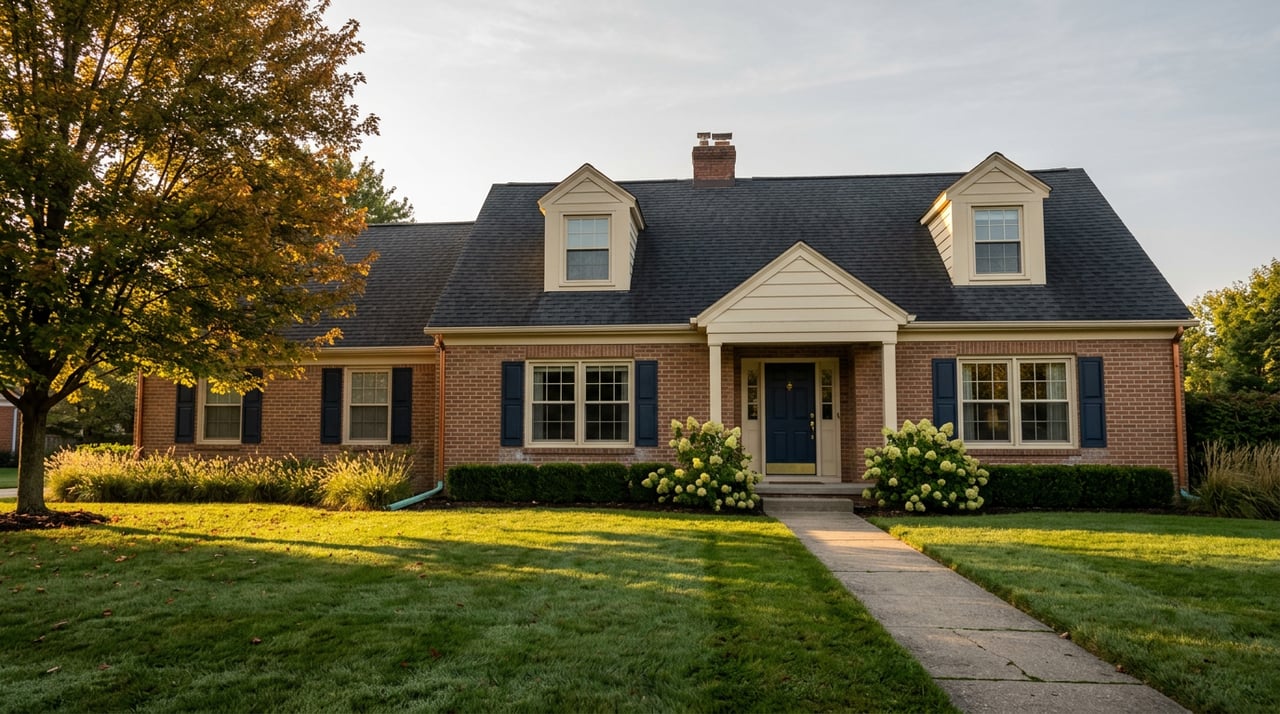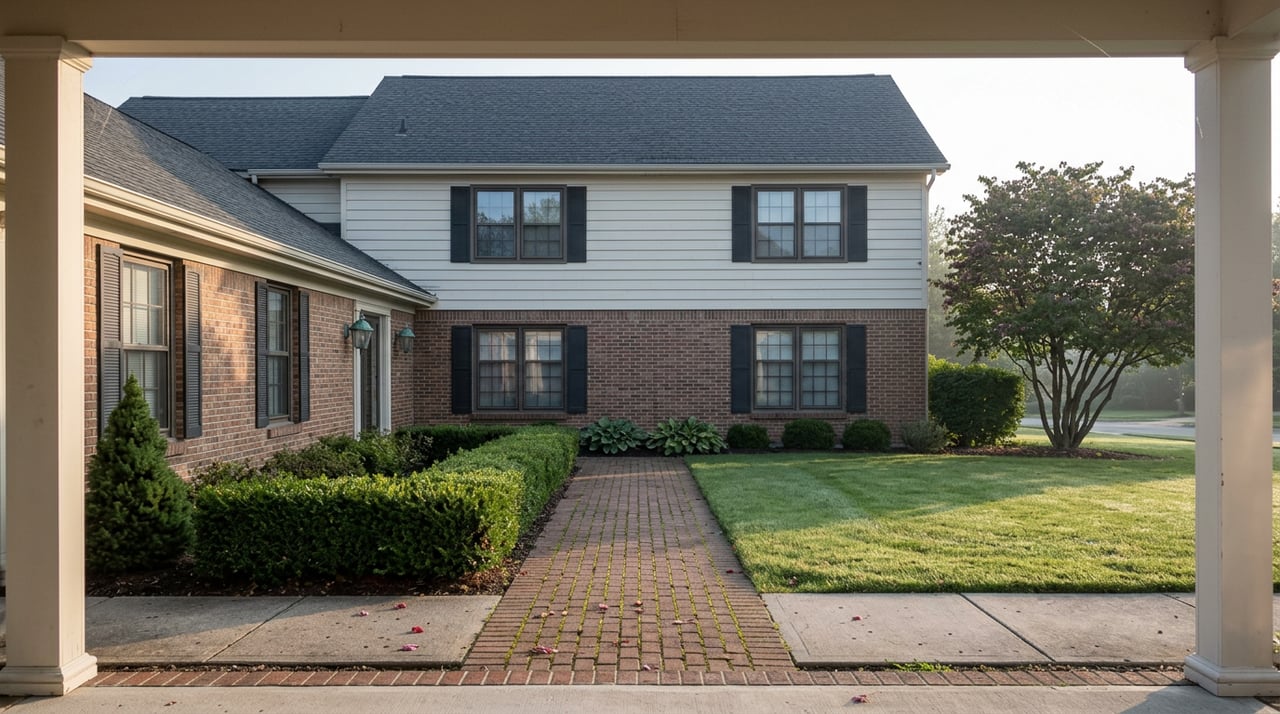
Walk a few blocks in almost any older Akron neighborhood and you can find two houses selling for close to the same number, sitting on the same kind of lot, built to a similar size. One of them will carry a property tax bill that barely moves for the next several years. The other will carry a bill several times larger, on the exact same assessed value range. Nothing on the listing sheet tells you which house is which. You find out after closing, when the first tax bill arrives.
That gap is not a pricing error and it is not a fluke of the assessor's office. It is a City of Akron incentive that has been running since 2017, and it is about to show up in more neighborhoods than it has in years, because the city just finished a project designed specifically to make new infill houses cheaper and faster to build on the empty lots scattered through Akron's older blocks.
What the abatement actually does
Akron's residential Community Reinvestment Area program exempts 100 percent of the added property value created by new home construction or a qualifying renovation, for 15 years. The exemption applies to the increase in value, not the whole property. A homeowner who adds a porch, finishes a basement into living space, builds an addition, or tears down and rebuilds still pays tax on the home's pre-improvement assessed value. They simply are not taxed on the jump in value that the work itself created, for a decade and a half.
A few rules govern who qualifies. The project has to represent roughly $5,000 or more in investment. The property has to sit inside Akron city limits, confirmed against the Summit County Fiscal Office's own property records, not just inside the metro area. Taxes and assessments on the property have to be current. And the home has to be kept up to city standards or the exemption can be pulled.
The part that catches buyers off guard is what happens at resale. If a home sells while its abatement is still active, the exemption transfers with the property. The new owner keeps the reduced bill for whatever years remain on the original 15-year clock. That is good news if you are buying a five-year-old renovation with ten years of abatement left. It is a much smaller benefit if you are buying a rehab that is already in year fourteen, because the full tax bill lands the year after you move in.
Why the same list price can hide a very different bill
The abatement matters more in some parts of Akron than others, because the underlying tax rates are not uniform across the city. Summit County property tax figures show effective bills varying widely by zip code, from roughly $1,139 a year on the low end to over $8,400 on the high end, driven mostly by which school district and special assessment levies apply to a given block. Akron's countywide median effective property tax rate runs close to 1.93 percent, higher than both the Ohio and national medians.
That spread means a 15-year exemption on added value is worth a very different amount depending on where the house sits. In a zip code with a lighter levy load, an abatement might shave a modest amount off an annual bill. In a zip code near the top of that range, the same abatement can be the difference between a manageable monthly escrow payment and one that surprises a buyer who priced their offer off the seller's current, abated tax bill rather than what the bill becomes once that exemption expires.
This is the trap in comparing neighborhoods by list price or even by the seller's current tax bill. A tax bill on an active listing reflects whatever abatement status that specific house currently holds. It does not tell you how many years are left on the clock, and it does not tell you what the bill looks like once the exemption runs out.
The city just made this a lot more common
Akron's abatement program exists because, for a long time, building new housing in the city simply did not pencil out. Back in 2015, fewer than 10 new houses were built in Akron while more than 500 were demolished. The tax exemption was designed to close that gap between what it costs to build a home and what that home could actually sell for in a market where existing housing values had been depressed for decades. The idea, as one former city planning director put it, was about unlocking latent demand for urban living.
City data suggests the incentive has kept working. In 2025 there were 64 applications for new-construction tax abatements in Akron, a number the city treats as a reasonable proxy for how many new homes actually got built that year. Against that, more than 40 percent of the city's existing housing stock was built before 1950, and the city demolished 96 blighted homes last year alone, adding to the hundreds of vacant, city-owned lots already scattered through older neighborhoods.
That combination, old housing stock next to empty lots next to an active tax incentive, is exactly the setup that produces the price-versus-tax mismatch described above. And on September 2, 2026, the City of Akron and the Summit County Land Bank announced they had finished a tool built to make that setup even more common: a set of 10 pre-approved house plans called Made in Akron, ranging from a small cottage up to a three-unit building, along with a Pattern Book spelling out how new construction should fit into existing blocks.
The plans were designed by Ryan Grass of the Akron firm Grassroots Architecture, working with the city and the Land Bank. Because they have already been reviewed by the Summit County Building Standards Department, a builder or resident who uses one can skip months of custom design review. Grass has said previously the pre-approved plans could save a builder three to eight months waiting on approval. Akron Planning Director Kyle Julien has estimated the designs save roughly $8,000 in construction costs as well, and noted the range was capped at three units because a fourth unit would trigger a different, commercial building code.
"It fits in a lot of neighborhoods."
That was Julien's description of why the designs were built the way they were, sized and styled to slot into narrow, older Akron lots rather than stand out from them. Summit County Land Bank Executive Director Patrick Bravo framed the goal in similar terms, saying the plans are meant to go toward taking some of the uncertainty, time, and expense out of building a new home. Mayor Shammas Malik has tied the effort to a broader push that also includes a new Akron Dreams downpayment assistance program, saying the city has to make it easier to build the kinds of homes and neighborhoods it wants to see. The administration's housing push has already reached individual neighborhoods directly. A recent Civic Assembly on Housing wrapped up its closing ceremony at The Well CDC in Akron's Middlebury neighborhood, one sign this is being treated as a citywide, block-by-block effort rather than a downtown-only initiative.
Put together, this means the pipeline for new, tax-abated homes landing on vacant lots inside older Akron neighborhoods just got shorter and cheaper to build through. More of those two-house comparisons, one old and fully taxed, one new and abated, are coming.
What this means if you are comparing neighborhoods right now
The current market gives buyers less room to sort this out after the fact than it did a year or two ago. As of June 2026, homes across the Akron area were selling in about 42 days on average, with roughly 0.78 months of supply on the market and prices up close to 11 percent year over year. In a market moving that fast, there is not much time to renegotiate once a buyer discovers a tax surprise during underwriting.
Before comparing two homes on price alone, it is worth asking directly:
- Is this property currently receiving a tax abatement, and if so, how many of the 15 years are left?
- Was the abatement granted for new construction or for a renovation, and what work does it cover?
- Does the seller's current tax bill reflect the abated amount, or the full post-improvement value?
None of this shows up on a standard listing sheet. It comes from the Summit County Fiscal Office's property record for that specific parcel, which lists whether an abatement is active and when it was granted. Renovated homes qualify the same way new construction does, so a beautifully finished older house with a new addition or a converted attic may be sitting on the same kind of exemption as the brand-new build next door. The list price will not tell you. The parcel record will.
A couple of things buyers ask
Does the abatement ever apply to something other than a full rebuild? Yes. Porches, additions, sunrooms, finished basements and attics, and gut renovations can all qualify, as long as the work represents roughly $5,000 or more in added value and the paperwork was filed with the city before the work was inspected and recorded by the county auditor.
What happens to the tax bill the year the abatement expires? The property moves to being taxed on its full post-improvement assessed value, meaning the bill can jump noticeably in year 16 compared to what an owner or buyer had been paying. Anyone buying a home well into its abatement window should factor that eventual increase into their long-term budget rather than assuming the current bill is permanent.
Comparing Akron neighborhoods on price alone was always going to miss part of the picture. With more new construction headed for vacant lots inside existing blocks, the gap between an abated tax bill and a full one is only going to come up more often, not less. If you are weighing two homes that look alike on paper, it is worth checking the parcel record before you fall in love with the number on the sign.
If you want a second set of eyes on what a specific Akron listing's tax situation actually looks like, the Bartlebaugh Team is happy to pull the record and walk through it with you. Let's Connect.